Friday, November 21, 2014

WHAT BARNES MARTIAL ARTS REALLY DOES AS A MARTIAL ARTS SCHOOL


Barnes Martial Arts IS different from other Martial Arts schools in the area.

Although we, of course, teach kicking, punching and grappling, we are MORE than kicking, punching and grappling.

Although we teach the best in modern, real-world self-defense, we are MORE than just self-defense.

We believe that being a Black Belt –- or, as we call our students at B.M.A., a Black Belt in Training –- encompasses body, mind and spirit. To teach only the physical aspects of the Martial Arts, the fighting skills, without devoting equal time to the mental, character building and attitude facets is to do a great disservice to the practitioners.

We do not participate in sport karate tournaments, or chase trophies, because we believe the only true competitor is yourself. We believe that it is every one's duty to go to bed tonight having become just a little better than we were when we got up this morning. Therefore, we emphasize that the student has a responsibility to use their training in a way that not only best represents themselves and the Martial Arts, but in a manner that serves the greatest benefit to their families and communities as well.

We believe that a Black Belt means nothing without including service to others.

We believe in and teach ...
* Kindness
* Helping our fellow man
* Community
* Peace
* Compassion
* Empowering children to take a stand against bullies
* Positivity
* Awareness
* Building Character
* Respect for oneself and others
* The power of discipline
... and so much more.

We see ourselves as change makers, and in the wise words of one of my mentors, Tom Callos, “we are here to represent and realize the idea of true MASTERY; mastery over negative emotions and action; mastery over the foolishness of thinking you are what you own or can afford; mastery over apathy; mastery over disconnection, prejudice, and ignorance; mastery over the pitfalls of a diet without discipline, of a body let go, of a mind left unused.”

Though American Kenpo Karate informs our base, we are NOT restricted to the dictates, curriculum or dogma of any one style of Martial Art. We are open to the ideas of all systems. In this way we become unlimited in our potential. The style is merely a VEHICLE; it might be pretty, it probably has some value, but the car is not the journey; a car is made to take you on a journey.

And while teaching your children – yes, YOURS --  how to punch people in the face, choke them, and or defend themselves from the same — might seem on the surface like the mission of a Martial Arts teacher — I echo the view of Mr. Callos, that it is “not the MOST important work, NOT the work that really matters at that age, that might really bring about the change we have the potential to play a role in, or that might actually make these little people more powerful, participative, engaged, compassionate —and thus happier and more connected to that which it is best to be connected to.”

At Barnes Martial Arts we strive to be smart, connected, awake teachers, who use the martial arts to influence our students to participate in Life, not fights. Our aim is to provide the tools, experiences and viewpoints that speak of a better, more compassionate, less violent world.

We want to do this at a Level 10, directly affecting not only our students but our communities as well. We want to do it better than anyone else in our area (and I truly think that we already are), in our town, in our sphere of friends and peers, maybe as good as anyone in the nation or the world.

Barnes Martial Arts is going beyond the physical to redefine the very concept of self-defense – to include ANYTHING that might harm our bodies, minds and spirits.

Food? Yes, guarding what we put into this incredible machine (our body) IS self-defense.

Our environment? Of course. Pollution, littering, not caring for our land and water – all of those things directly affect our health and are, therefore, self-defense.

Our actions and behaviors? The things that we say and do out of anger or without thought bring about chains of suffering to ourselves and others.

These things, in addition to kicking and punching, etc., truly are at the core of what “self-defense” is today. By paying attention to our own actions and behaviors we think globally and act locally. We use our Martial Arts training and teaching to engage young people and adults in Acts of Kindness, in the importance of performing daily acts of goodness, compassion, care, connection — and what doing for others does for ourselves; THIS is the spine of our work. 

I am talking about focus, direction, and a deeper sense of connection to our world. I am talking about making a difference and forming a legacy for ALL of our students.

We have a Vision. A Grand Vision.

To my knowledge, no one in our area has EVER tried to accomplish what we are attempting -- a wholesale re-imagining of the role of the Martial Arts teacher and the Martial Arts school and integration into the community; elevating it above mere sport ... or a kid's activity ...or fighting. We aim to remove the Martial Arts Studio from the fringe and place it on a level of importance and vitality with mainstream education. Our students are our living testimony to that goal. 

If you support the initiative to take these lessons out of the Dojo and into the world at large ... if you think we are doing good work ... if you agree with our mission, we respectfully ask that you spread the word: tell others about us, SHARE this blog page on your own pages. The greatest compliment that you could possibly give us is to let others know about us.

Together we can continue to make a real difference.


Tuesday, November 11, 2014

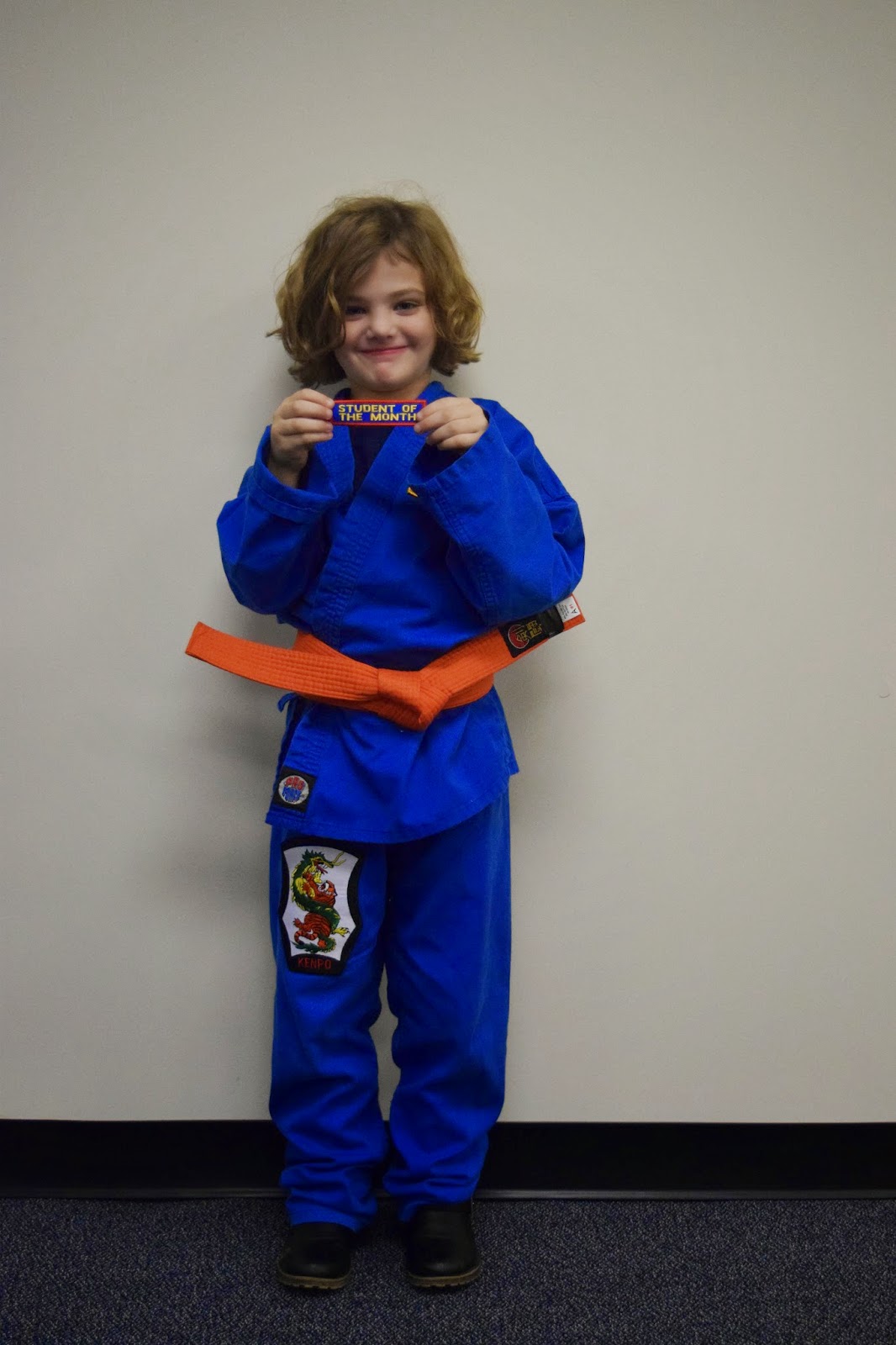
Anna Weiss ... October Student of the Month

On Friday, November 5, 2014 we chose Anna Weiss age 6, as Student of the Month for October. She has been a member of the Little Dragons program since just after the school opened in September of 2013.
Anna, who lives in Forty Fort with her parents, Erin and Michael Weiss, attends school at Wyoming Area Catholic. Her favorite subject is math and her favorite teacher is Mrs. Ungureit (Mrs. U.) She lists her other interests as music (especially her favorite song, "We Wish You a Merry Christmas") soccer, drawing and ... eating noodles!
Anna currently holds the rank of Orange Belt, First Stripe, and her favorite Martial arts technique is the ax kick.  
Anna is a wonderful girl and a terrific student. She is focused, very friendly and gives 100% effort in class. She has a great attitude and sense of humor. In terms of technique, she has really come along in just a few short months; she has shown a lot of improvement and dedication. Anna likes a challenge and she is willing to try new things in class. For instance, we do push-ups with the kids throughout the class -- Anna came in one day and demonstrated one-armed push-ups!! She is really determined to be and do the very best that she can."

Mike and Erin Weiss say, "We are very proud of our daughter and the great strides she has made. In her year at the studio she has become more confident, self-disciplined and more aware of others and their feelings all while having fun! We couldn't ask for more!"

Students of the Month are selected based on a variety of criteria, including: class participation, discipline, enthusiasm, listening skills, technique, attitude, behavior and how well they exemplify "Black Belt Excellence and Attitude" in ALL areas of their lives, in and out of the studio.  

Students of the Month receive a special patch for their uniform and a 3-D Certificate, suitable for framing.

Saturday, October 25, 2014

The Cold, Hard Facts About Domestic Violence.

In light of both October being National Domestic Violence Awareness Month, and our Domestic Violence Education and Awareness Seminar scheduled for Saturday, October 25 from 2-4pm, we thought it might be eye-opening to share some of the facts and statistics behind this woefully under-reported crime.

The following statistics were culled from publicly available published reports from various sources, including the Federal Bureau of Investigation (FBI), U.S. Department of Justice (USDoJ), the Centers for Disease Control and Prevention (CDC), the Institute for Children and Poverty, National Coalition Against Domestic Violence, and National Criminal Justice Reference Center among others. 


Domestic violence (also known as intimate partner violence) can happen to anyone, regardless of gender, race, ethnicity, sexual orientation, income, or other factors.

The Victims

  • 1 in 4 women will experience domestic violence during her lifetime.
  • Women experience more than 4 million physical assaults and rapes committed by their partners, while men are victims of nearly 3 million physical assaults.
  • Women are more likely than men to be killed by an intimate partner
  • Women ages 20 to 24 are at greatest risk of becoming victims of domestic violence.
  • Every year, 1 in 3 women who is a victim of homicide is murdered by her current or former partner.

The Families

  • Every year, more than 3 million children witness domestic violence in their homes.
  • Children who live in homes where there is domestic violence also suffer abuse or neglect at high rates (30% to 60%).
  • A 2005 Michigan study found that children exposed to domestic violence at home are more likely to have health problems, including becoming sick more often, having frequent headaches or stomachaches, and being more tired and lethargic.
  • A 2003 study found that children are more likely to intervene when they witness severe violence against a parent – which can place a child at great risk for injury or even death.

The Circumstances

  • Domestic violence is most likely to occur between 6 pm and 6 am.
  • More than 60% of domestic violence incidents happen at home.

The Consequences

  • According to the U.S. Department of Housing and Urban Development (HUD), domestic violence is the third leading cause of homelessness among families.
  • In New York City, 25% of homeless heads of household became homeless due to domestic violence.
  • Survivors of domestic violence face high rates of depression, sleep disturbances, anxiety, flashbacks, and other emotional distress -- all indications of Post-traumatic Stress Disorder (PTSD).
  • Domestic violence contributes to poor health for many survivors.  For example, chronic conditions like heart disease or gastrointestinal disorders can become more serious due to domestic violence. 
  • Among women brought to emergency rooms due to domestic violence, most were socially isolated and had fewer social and financial resources than other women not injured because of domestic violence.
  • Without help, girls who witness domestic violence are more vulnerable to abuse as teens and adults.
  • Without help, boys who witness domestic violence are far more likely to become abusers of their partners and/or children as adults, thus continuing the cycle of violence in the next generation.
  • Domestic violence costs more than $37 billion a year in law enforcement involvement, legal work, medical and mental health treatment, and lost productivity at companies.
#1 FACT: Most domestic violence incidents are never reported.

By speaking up, speaking out, shining a light on the issue, breaking the silence, and joining forces with the Domestic Violence Service Center (DVSC), Barnes Martial Arts is striving to make a difference and change those facts for local victims of domestic violence. 

For more information on Domestic Violence and what you can do to help please contact Louise at DVSC (570)-823-6799 ext .238 or visit https://www.domesticviolenceservice.org/


The information in this blog article appeared in a previous, slightly differently edited form at SafeHorizon. 

Saturday, July 12, 2014

Finding Stillness, Part 2


Finding Stillness, Part 2

The Chinese symbols to the left may be translated as quiet, peaceful, calm, stillness, comfort. 

As we discover the stillness within, we recognize the calming effect it has on our mind, body and spirit.

But stillness may have a calming effect on the world around us as well. By becoming still, we may cause others to pause, to pay attention; our quiet also quiets others. We set the mood for those who work and train and interact with us.

We lead by example. 

When we rush and set a hectic pace – at work, in school, at home, on the mat in Martial Arts class -- others become stressed in an effort to keep up. For example, if we hurry our way through a technique -- especially when we are first learning it -- our partners may become frustrated as they attempt to work with us. Some people, some students, are more concerned about "what comes next" than they are about what they are working on Now; that is how mistakes are made, how tempers flare, and how, sometimes, people get hurt. 

Stillness has the opposite effect. It slows the world down, allows us to focus, gives us time for contemplation, for what matters most.

There are those among us who will claim, “I can't slow down; too many things depend on my attention.” Those are the people most in need of stillness and quiet. Because, eventually, all of those things pulling at our attention tend to cause us to burn out. Ever notice how some kids who are involved in everything -- piano lessons on Monday, soccer several times a week, art class  on Wednesday, rehearsing for the school play in the evening, gymnastics on the weekend -- oftentimes end up chucking it all and doing nothing? That is a cry for stillness. 

We don't always find stillness by sitting quietly ... although that is a wonderful method. Sometimes, though, we must access that small, quiet part of our Spirit while we are engaged in activities -- athletes call it "being in the zone"; when all external distractions fade away and all that is left is the present moment. Their bodies are moving, acting and reacting to the game, but their minds are quiet, calm, focused. Most of us have experienced such a feeling at one time or another -- students may feel it during a test that they feared, only to find that the answers flowed as easily as their own breath; nurses experience a form of stillness when they deal with a crisis; you may have known such a feeling when you flawlessly performed a technique at which you were previously frustrated. 

Being quiet, finding stillness, is such a simple thing, but it is not easy. It takes effort. It takes strength to be still when others rush, to not get caught up in, or wose, overwhelmed by the flow. It takes courage to be different, to go against the stream, to slow down while others are hurrying. Others might think us weird at first, but that is OK. Oftentimes, it is the people who are thought to be weird -- the eccentrics, the artists, the pioneers -- those who think differently, act differently who break out of the shackles of routine and make the most difference in their world, and in the world at large. 

While we may not always be able to sit in silent stillness, finding a few minutes for quiet contemplation can be as simple as getting up a few minutes earlier in the morning. Don’t do anything, don’t plan your day, don’t check email, don’t eat. Find a comfortable chair, or go outside, if possible, and just sit, and learn to be comfortable being still. Find a chair in your house, or on a front porch, or sit in the cool grass of your backyard. It can be a park bench, or the beach, or a path in the woods. Where ever you sit, let it be a ritual that you look forward to. 

Then just sit ... and breathe. Eyes closed or open ... it doesn't matter. As thoughts arise (and they will!) simply let them slip away. Listen to the sounds of the morning world -- birds singing, the breeze as it rustles the leaves of the trees, even the sound of traffic in the distance. Pay attention to the smells -- the soil, the air.

Gradually, as you become quieter you will be more aware than ever before of all that is going on around you. You will realize that, at any time, you can become an island of calm in a sea of activity. 

With practice, comfort will come. If mornings are no good, find another time that works for you -- during your lunch break, after work or school, just before you go to bed, or arrive for your Martial Arts class 5-10 minutes early and sit quietly ... even if others around you are not. The actual time that you choose doesn't matter -- what you do with it, or don't do with it does. 

From this small place of stillness soothing calm will radiate to the rest of your day. You will learn to find little pockets of stillness everywhere: when you first start your work or school day, when you are ready to sit down and create, when you’re about to eat, when you are ready to take to the mats in class, during a meeting ... any time. 

Practice, regularly. That is the key. You cannot try it once, then say, "Well it doesn't work for me!"

Like any kick or punch, any throw or grappling technique, you must practice it over and over, until it becomes part of you.

Practice, and learn.

Practice stillness, even -- perhaps especially -- when you don't want to. 


Sunday, July 6, 2014

Finding Stillness, Part 1

Finding Stillness, Part 1

“A stillness descended and there, in the midst of the storm the heart whispered, ‘peace’…” -- Kate Mullane Robertson


     We live in a noisy world.

     We are surrounded by a seemingly endless cacophony of sound – car horns honking; the rush of heavy traffic; airplanes; radios blaring; cell phones ringing (always ringing, it seems, in the most inappropriate places and at the most inconvenient time but we always need to answer, don’t we?); the television droning on even when we aren’t watching; babies crying; sirens; construction; conversations every place we go – some muted, some quite heated.

     It seems there is no escape from the racket.

     But “noise” can be internal as well: we can’t sit still; we must constantly be doing something, anything; we fidget; we tap our foot impatiently; "I have to go to the gym" … "pick up the kids" … "oh no, I’m late for school" … "work, work, work" … "I have a meeting" … "late for dinner" … "have to get to my appointment" … "no time to eat, gotta go, gotta go, gotta go".

     “Noise” also means that our minds never stop running; they, too, must be forever occupied … worries about homework … bills to be paid … work … school … non-stop email … instant message requests … Facebook and Twitter updates … constant texting … mindless “reality” television …interruptions of all manner and form.

     It seems we are almost afraid of silence, or, at the very least, we appear to be extremely uncomfortable with it.

     
     When the noise of the world becomes a dull roar that pervades every second of your life, a rush of activity, a drain on your energy, a pull on your attention, you find that you no longer have the energy to pay attention or take action.

     In a sense, this noise, this unceasing, chattering demand for our attention is an illness that leaves us stressed, depressed, overweight, burnt out and sick at heart.

    Deep down, we are aware that something is missing, because despite the constant commotion, our Spirits are empty and unfulfilled. We yearn for peace.

     The solution is simple: Pause. Be still.

     Take a moment – even two minutes -- out of your busy day to pause in the middle of all you are doing, all that is happening around you. Close your eyes, and sit still. Breathe in, and breathe out, and pay attention to your breath as it comes in and goes out.

     Just. Sit. Still.

     Sitting still like this, just breathing, will be difficult at first, especially for those of us who labor under intense schedules, or attach importance to always be “doing”. In fact, to those people, this stillness might seem like inaction, a waste of time, unproductive -- which we are taught is a bad thing. We have been lead to believe that such stillness is a mark of laziness.

      And yet, simple stillness, sitting in silence, can have a profound effect on our world.
    
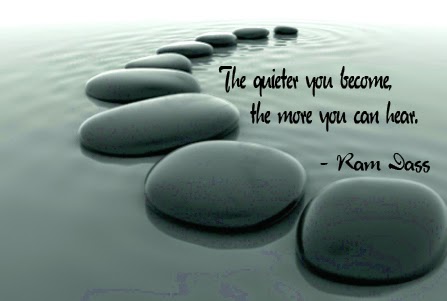
     At the very least, it calms us, providing a small oasis of quiet that allows us to hear our thoughts, that allows us to catch our breath, that gives us room to breathe at all. 

     It is the antidote to the stress and rush we feel daily.

Thursday, April 3, 2014

It Isn't Just the Kids ... The Bully at the Blackboard

I believe that the majority of teachers are dedicated, considerate, sympathetic individuals. 

As student to teacher ratios increase, faced with a wide variety of student personalities, and often fighting an entrenched bureaucracy that is frequently more concerned about money than people, their job can be thankless.

I have good friends who are/were public school teachers; they are on the whole decent, caring people. After speaking with them about situations they have encountered I completely understand how they 
can be under a tremendous amount of stress.

However, I have also personally had several experiences with teachers who were ... less than pleasant. One, a gym teacher, stood by and observed as I was beat up by another student; another,
an Algebra teacher, openly and repeatedly ridiculed me in front of the class (and, as you have learned in class, two of the requirements for bullying are that an action or behavior be repeated and have bad intentions). Perhaps I will cover those specific incidents in greater depth in another article, but those experiences opened my eyes to the fact that even people in whom we -- and our children -- routinely place our trust can be bullies, and be abusive.

Physical bullying is fairly easy to spot -- black eyes, bumps and bruises. Emotional and psychological abuse -- repeated name calling, insults, character assassination, even sexual harassment -- on the other hand, can be far more subtle. Too many children are already silent about being bullied by their peers; when such treatment comes from an authority figure, the matter may be seen as totally "undiscussable". 


Our kids spend a minimum of 8 hours a day out of our sight when they are at school. We need to know they are safe.

I have provided several links to articles about incidents where teachers abused their authority. The articles also contain tips and suggestions about what can be done if such behavior occurs. 


The bottom line, in my opinion, though ... is that we need to keep open lines of communication with our children. Talk to them.

Barnes Martial Arts mission is to eradicate bullying behavior in ALL of its ugly forms. 


http://www.greatschools.org/parenting/bullying/5063-when-the-teacher-is-the-bully.gs?page=all

http://bullying.about.com/od/Victims/a/10-Ways-To-Respond-To-A-Teacher-Who-Bullies.htm

http://shine.yahoo.com/parenting/tween-catches-bully-teacher-on-tape-234052398.html

http://www.webmd.com/parenting/features/teachers-who-bully?page=3

Monday, March 31, 2014

Making Kindness a Mission

At Barnes Martial Arts we do more than pay lip-service to being kind to others ... we walk the talk. Kindness changes lives -- it can ease the pain of sickness; lift one out of a blue mood; change the course of a bad day; and a gentle smile or an act of kindness and compassion has been known to literally save lives.

That is why, each month, in conjunction with the Random Acts of Kindness Foundation -- a NATIONAL organization dedicated to spreading the message that Kindness can change the world -- our Studio has committed to undertake a "Kindness Mission".

Each Mission will be a project or activity that we will perform AS A GROUP, as a school, and that will have a wide-ranging impact on our community.

It doesn't have to be complicated or a huge gesture to accomplish this, but it DOES have to be something for which there is a NEED. Kindness can take many forms, grand or subtle -- helping someone carry groceries; holding a door for another person; a compliment; organizing a fundraising event for someone suffering from an illness; rebuilding a neighborhood after a natural disaster; smiling at someone who is having a terrible day. 

A big community like ours means a big opportunity to make a big difference.

For instance, our March Kindness Mission Theme was: "Community!" On Saturday, March 29, thirteen volunteers gathered at the Studio at 10:00 AM to clean up Murray Street.

It was a dreary overcast day, and we defied the rain, splitting into two groups; one headed up Murray street toward Kingston, the other group heading down Murray street toward Swoyersville. We started out by walking up one side of the street, then when we got to the end, we crossed over to the other side and worked our way back to the Studio.

It took us just under two hours to clean the streets, sidewalks, and even a few front yards along the way. And, oh the things we found!! -- paper, plastic bottles, loose change, a pool noodle, monopoly money, about 10 million cigarette butts, a bone (!) and ... a "lobster" (ask the kids!). 

I have NEVER seen kids get so excited about cleaning up trash!!

By the time it was over, we had filled two and a half 33-gallon garbage bags!! 


Afterward, back at Barnes Martial Arts everyone got to enjoy delicious pizza and soda, kindly donated by Pizza Bella in Forty Fort. They heard about our Kindness Mission and went above and beyond!! My sincerest thanks also to Pizza Bella! You guys rock!

So I just want to say thank you, one more time, to all of our students and their families who made our first Kindness Mission such a success. It was a LOT of work, but it was worth it because we really helped to make our community a better place. I am proud to be your teacher. 
We may be a small studio, but we are mighty!!

In the months to come, as we continue to grow as a school, we will take on new and exciting Kindness Missions. By making Kindness a habit, we have a direct influence on the future. 

Here are a few pictures from the event. More pictures and details can be found on our Facebook page: https://www.facebook.com/barnesmartialarts


Sunday, March 30, 2014

Who Inspires You?

We live in a world that, unfortunately, tends to deify celebrity. The opinions thoughts, and actions of actors, singers, and sports figures are weighted disproportionately to the rest of us. These people are held up as heroes and role models -- and yet their behaviors and lifestyles (drinking, drug use, general disrespect) are often incongruent with the position we have assigned them.

I am inspired by very few so-called "celebrities" -- Chuck Norris and His Holiness the 14th Dalai Lama are the only two who come immediately to mind. 

A number of people inspire me in different ways -- my daughter, my parents, my fiance, my students, to name a few. In general, most of the folks whom I look up to are "real people", people you might actually meet at any given time. They inspire me with their strength; their attitude; their ability to overcome adversity; and the things they've done -- and continue to do -- with their lives.  They tend not to seek out the spotlight, and as a consequence, you may not have heard of them.

Tom Callos is a man whom I greatly admire.

We share a similar vision for the Martial Arts. THIS is what we strive for in our small dojo.


Wednesday, March 19, 2014

On Bullies

Tyler Clementi, 18, Rutgers University; jumped to his death from the George Washington bridge … Larry Weinberg, 17, of Trenton, NJ hung himself with a leather belt … Jessica Logan, 18, Sycamore High School student asphyxiated herself … Jessica Train, 15, a pupil at Monkseaton High School in North Tyneside, Wallsend, England hanged herself … Phoebe Prince, a 15-year-old South Hadley High School student hanged herself ... Hope Witsell, 13, a student at Beth Shields Middle School in Ruskin, FL, hanged herself from her bunk bed … 14 year old Samantha Kelly of New Boston, Michigan and a student at Huron High School in southwest Detroit, hanged herself … Jamarcus Bell, 14, a freshman at Hamilton Southeastern High School, Fishers, IN took his own life … Asher Brown, 13, of Cypress, TX and a student at Hamilton Middle school in Houston shot himself with his father's handgun.

All of these kids were bullied by their peers, or subjected to harassment at the hands of classmates. All are dead as a result of this treatment. Unfortunately, they are just a few of the hundreds that have taken their own lives in recent years. Boys and girls alike are equally bullied.

Make no mistake: It is not a rite of passage. 

It is not "kids being kids."

And it is leading to tragedy in numbers greater than ever before. We cannot and should not expect kids to “just suck it up.” 


When speaking with school children about bullies and bullying, and how the study of Martial Arts contains specific benefits not found elsewhere, I use a personal story to illustrate my point.

My story.  

Upon graduating high school -- where I, like the kids above, had been tormented mercilessly -- I thought I had finally left my problems behind me. I thought I was free. 

That turned out not to be the case. 

My father had secured a job for me in the garage of a local trucking company run by one of his friends. It was my first real job, and one of my responsibilities was to fuel the big trucks as they came in to the lot. Late one afternoon a driver, agitated from some problem that occurred on the road, decided to vent his anger on the nearest available person … me. I do not recall the exact details of the argument that followed, but I do remember vividly that as the exchange became heated he hit me – a solid open-handed blow across the side of my head that sent me reeling. I also remember the rage that came over me, brought about by years of similar treatment in school. I was overcome by tears of frustration. But this was a trucking company, where “Real Men” don’t cry; and he laughed. 

That was all it took.

I blindly hit back. At the time it didn’t register that I had probably made a huge mistake, since – like many bullies -- he was substantially larger. Fists flew from both sides and it took several of the other workers to separate us and finally remove me to the front parking lot … more for my safety than his. 

My head spun as much from the sudden flood of memories as from the trucker’s slap. It was as if I was back in school. I could not live like this any longer. If I didn’t do something – now – I was condemning myself to being a lifelong victim. Within half an hour I was on the phone with the only Martial Arts studio near where I lived. I made an appointment that would change my life.

Upon meeting the man who was to become my instructor, I was intimidated. A stern taskmaster, he possessed all the charm and demeanor of a drill sergeant. I nearly walked out the building, not recognizing much difference between his actions and the actions of those who had tormented me. Yet, as I watched the class, I was riveted. I was determined to join. 

I wanted revenge; I wanted to be tougher. And I knew -- I knew -- this was the way to achieve it. I made my decision and enrolled.

The training was harsh – the toughest thing I had ever done in my life – sometimes even brutal. Today most Martial Arts studios are well-lit, air-conditioned, carpeted affairs and family-friendly. This studio and this specific instructor, however, were decidedly “old school.” The bare wooden floors had no padding; there was no ventilation, and it smelled like the stale sweat of ages of rigorous training sessions. The instructor's overriding philosophy basically boiled down to this: “Punish the body to strengthen the heart and the mind.” The regimen was intense and grueling, the pace insane. More often than not I would arrive home with my body a mass of bruises and swollen parts. My mother took one look at me and asked, “You actually pay someone to do this to you?” My only answer was, “I have to.”

One exceptionally hot summer day early in my training, the sensei closed all of the windows and turned on the heat. It was the middle of August, and outside the streets of our small town baked in the heat. He pushed us to our body’s very limits, drilling us mercilessly in basic kicks, punches, and blocks. People began to drop. One became sick. Several others, who could go no further, sat on a bench reserved for spectators. With no air conditioning or fan to cool us, the temperature was in the high eighties when we started, but must have soared to 110 degrees in the training room. Cruel? Maybe. Unhealthy? Most definitely. Unthinkable in this more warm and fuzzy era? Absolutely. One didn’t pay much attention to the possibility of dehydration or heat stroke in those days. Yet such severe training forged my will and my discipline like steel. Through the sweat, sore muscles, aches, pain and blood I grew stronger. 

I was building my arsenal. Remember that phrase; it will be important soon.

A year or two later I performed in a Fourth of July karate demonstration at Tunkhannock Area High School, the very scene of much of my torment. By sheer coincidence, sitting in the audience  was the trucker whose slap had been the catalyst that sent me on this path. I had since moved on from the job at the trucking company and, though I never really forgot about him I went on with my life, putting my thoughts of revenge into a dusty corner of my mind.

It was a bright day; hot and full of sunshine. During my part of the demonstration I was scheduled to break several cinder slabs with kicks and punches. The segment culminated with me using my head to shatter two that were stacked one atop the other. Head breaks are always crowd pleasers when they work (and comically gruesome when they don’t) and that one went off exactly as planned. The audience loved it and I thought nothing further of it, until days later when I engaged in conversation with a woman who had a mutual friendship with the aforementioned truck driver and me. She let me know that she had been speaking with him and asked if, having seen my performance, he would want to slap me now. He emphatically said “No.” 


At that moment I realized that I had changed, that I was no longer the kind of person who would be a victim to anyone. To this day, I don’t think that trucker knows or understands how large a compliment he paid me; for without throwing a single punch or kick at him, without resorting to violence of any kind, I had, in a fashion, earned his respect. 

The point is: It was not breaking the cinder slabs that made the difference in his thinking; it was my change in attitude, my perception of who and what I was. I had grown stronger mentally as well as physically, and it showed in the way I walked and carried myself. My head was held high, my shoulders squared. CHARACTER – who you are -- I tell the children in my seminars, is the essence of the Martial Arts, and it makes all of the difference in the world. It was the key weapon in the arsenal I mentioned previously. The arsenal, I discovered, was filled with as many mental weapons as physical.

Bullying is an epidemic in this country, and indeed, the world. It is, however, too often a "silent epidemic" as many kids are reluctant to speak with parents or school officials; this may be due to shame, embarrassment, having been threatened, or fear of being seen as a squealer.  

There is an alternative to taking one’s own life; there is a pathway out of the darkness. While Martial Arts were my chosen path, I respect that may not be the way for everyone. Every child is unique, and for every child there is a unique answer. Through education, kids who are bullied must be made aware that there is hope. 


Before we can find the answers we must ask the right questions of our children. We must step up and accept responsibility for our kids, even during the times they claim not to want our help. As parents, educators, authority figures we must open our eyes to the problem and take away some of its power by shining a light on it. We must get involved. 

Scattering the shadows, real or perceived, means that the abuse is no longer suffered in secrecy.

(This article first appeared in a slightly altered form in the November 2010 edition of the “A Mindful Journey” blog. Copyright, November 20, 2010 by Gary R. Barnes. All rights reserved.)


Saturday, March 15, 2014

A Kindness Checklist

So you think that performing Random Acts of Kindness is a great idea (I do too!) but you don't know where to start. Here is a checklist of possible activities. You can do these for friends, family members even complete strangers (remember, though, if you are a younger student make sure Mom and Dad are there to supervise).

None of these take a lot of time, or cost a lot of money (most, in fact, cost nothing). The point is that Kindness is often found in the small gestures, the little things that someone does unexpectedly that can change a person's day.

Now ... get out there and change the world! I believe you will.


  • Open the door for someone.
  • Give a helping hand when you see someone carrying a lot of stuff.
  • Give a homeless person your leftovers from a restaurant.
  • Purchase a some umbrellas, blankets, ponchos at a dollar store and keep it in your trunk – when it’s a rainy/cold day, find a person who needs it and give them one.
  •  Give a lottery ticket to a stranger.
  • Leave anonymous thank you notes to teachers.
  • Invite a friend to the movies or dinner.
  • Put change in a vending machine.
  • Leave a book you have already finished somewhere for someone else to read.
  • Drop off a toy or game at a homeless shelter.
  • Pay for a bridge toll for the person behind you.
  • Send someone a small gift anonymously.
  • Drop off flowers at your friend or neighbor’s house.
  • Buy a meal for a homeless person.
  • Buy a movie ticket for the person behind you in line.
  • Pay for someone’s meal behind you at a fast-food drive-thru.
  • Write an inspirational note to someone who needs inspiration.
  • Send a card to someone in the military overseas.
  • Put something you no longer need on craigslist.org for free.
  • Drop off a toy or game at a hospital.
  • At the post office, leave some extra stamps at the stamp machine.
  • Buy a phone card and give to a homeless shelter for them to give to someone.
  • Open the phone book, pick a name, and send them something (movie tickets, thank you card, book, etc.) anonymously.
  •  Take flowers to a hospital ward and give them to someone who hasn’t had any visitors.
  • Drop off teddy bear to police department to give to traumatized children.
  • Drop a few coins in an area where children play, where they can easily find them.
  • Write letters of appreciation to groups who are helping the community, the environment, etc.
  • Go to a tourist spot and offer couples/families to take their pictures with their camera.
  • If you know someone who is having a hard time financially, pop $5, $10 or $20 in an envelope, disguise your writing or type the envelope, and mail it to them.
  •  Tape some change to a payphone with a card saying it is for whoever needs it.
  • Write anonymous, loving post-its for strangers to find.
  • At a restaurant, pay for a table’s lunch or dinner anonymously.
  • Pay for someone’s groceries.
  • Volunteer your time at a non-profit organization.
  • Smile!
  • Acknowledge the cashier who’s helping you and genuinely ask them how they’re doing.
  • Wave back to children who wave at you.
  • Say hello.
  • Reach an item off a high shelf for someone.
  • Give up your seat to someone who needs it more.
  • Remove debris or other obstacles from a road or path.
  • If you arrive at a stop sign at the same time as another driver, let them go first.
  • Pay someone a compliment.
  • Help someone with their groceries or bags.
  • Offer to help an elderly neighbor with their household chores.
  • Call a friend randomly and let them know you’re thinking of them.
  • Bring a treat to work to share with your coworkers.